Why CellReDM and Re2O Dosages are in mg, Not mL (1 Syringe? 1 Vial? Which is Correct?)
When trying to compare CellReDM and Re2O, the numbers feel unfamiliar. While conventional skin boosters are measured by volume like 1cc, these products are labeled by weight like mg. When 1 vial and 1 syringe are mixed in, it becomes difficult to know what is being compared. In this article, we will look at what each unit measures.
이 글은 일반적인 상담 준비 정보입니다. 개인별 피부 상태와 시술 계획은 의료진 상담에서 확인해야 합니다.
When looking into skin boosters, you often encounter two names these days: CellReDM and Re2O. However, when you try to compare them, the numbers seem unfamiliar. Products you previously knew were discussed in terms of volume like 1cc or 2cc, but these products show weight like 160mg, and terms like 1 vial and 1 syringe are mixed in. This is the first thing we clarify during consultations at Secret Clinic.

First, there is something you should know
There is a fact that must come before discussing effects. The raw material for these products is human donor skin tissue. It is processed acellular dermal matrix (ADM) where cells have been removed from donated dermis, and the Ministry of Food and Drug Safety classifies this not as a medicine or medical device, but as human tissue.
I am not saying this is good or bad. However, it is right for you to decide after knowing what is entering your body. This is also a part that medical staff should mention first.
Why dosage is displayed by weight
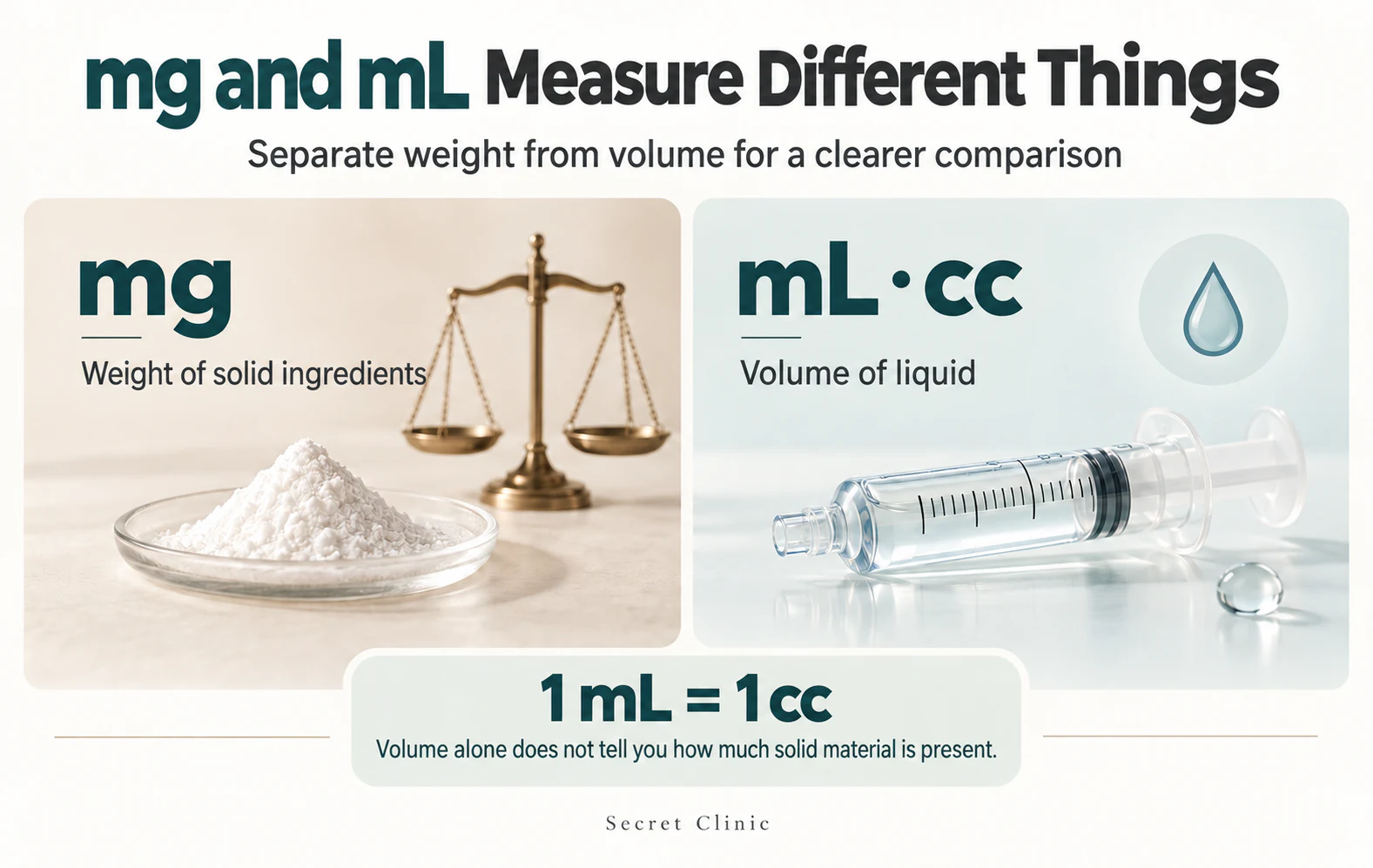
Hyaluronic acid-based skin boosters are liquid, so they are counted by volume like 1cc or 2cc. On the other hand, the main body of CellReDM and Re2O consists of solid components processed into fine particles. Solid materials are difficult to count by volume, so they are indicated by weight. Based on disclosed data, CellReDM is 160mg.
An important point emerges here. Solid components cannot be pushed in by themselves. They must be mixed with liquid to be injected.
1 vial and 1 syringe count different things
This is where the two units diverge.
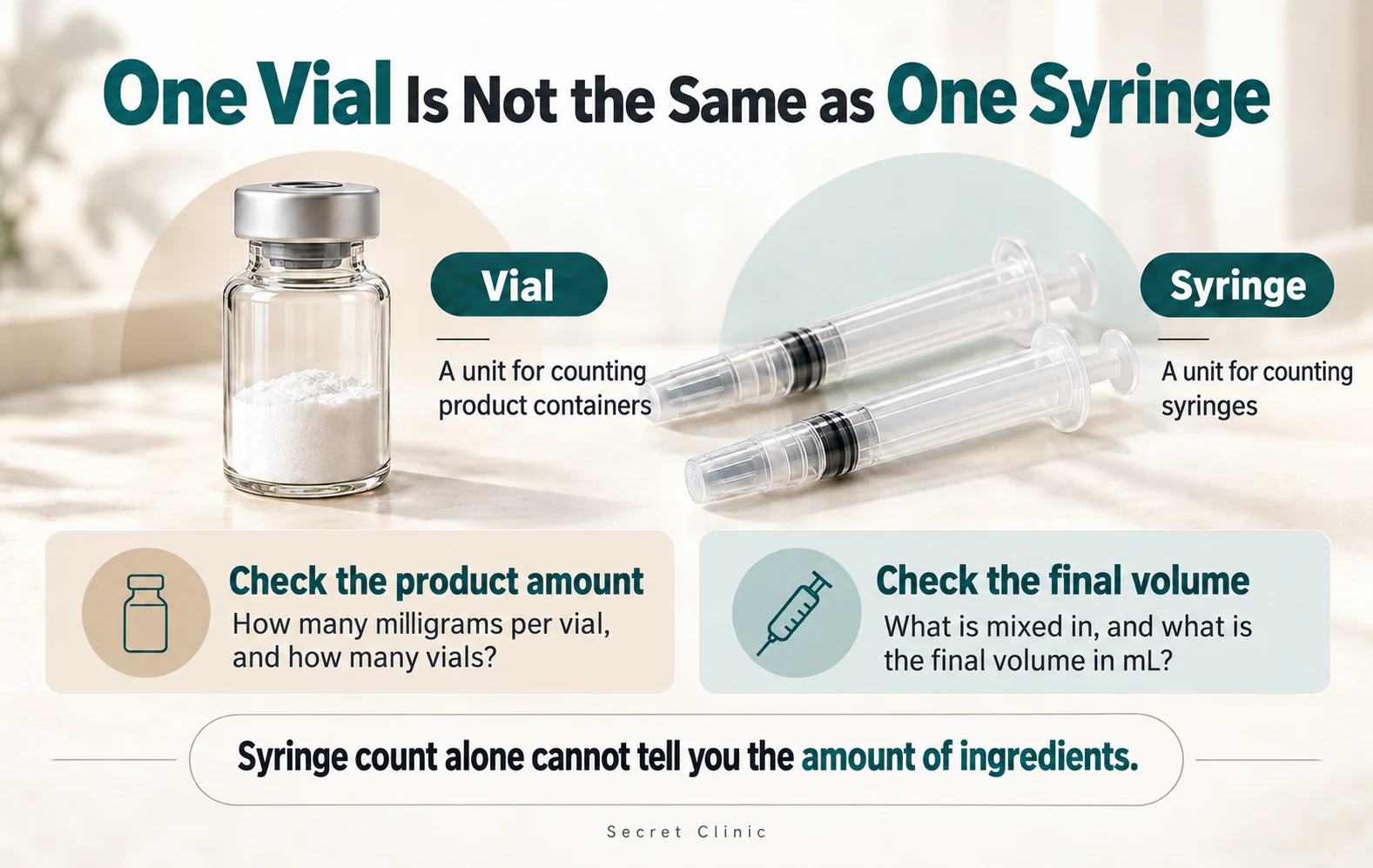
1 vial is one bottle of the product. Since the weight of the ingredients inside is fixed, it is a term used to count the amount of content. If it is one 160mg bottle, it contains 160mg of the ingredient.
1 syringe is one injector. Since it is a term used to count the container, you can know the volume, but it does not tell you how much of the ingredient is inside. This is because one bottle can be divided into two syringes, or two bottles can be collected into one syringe.
Therefore, “I received 1 syringe” and “I received 1 vial” are not counting the same thing. When comparing with other places, if one side talks in vials and the other in syringes, the comparison does not hold.
To compare, these two pieces of information must be present together:
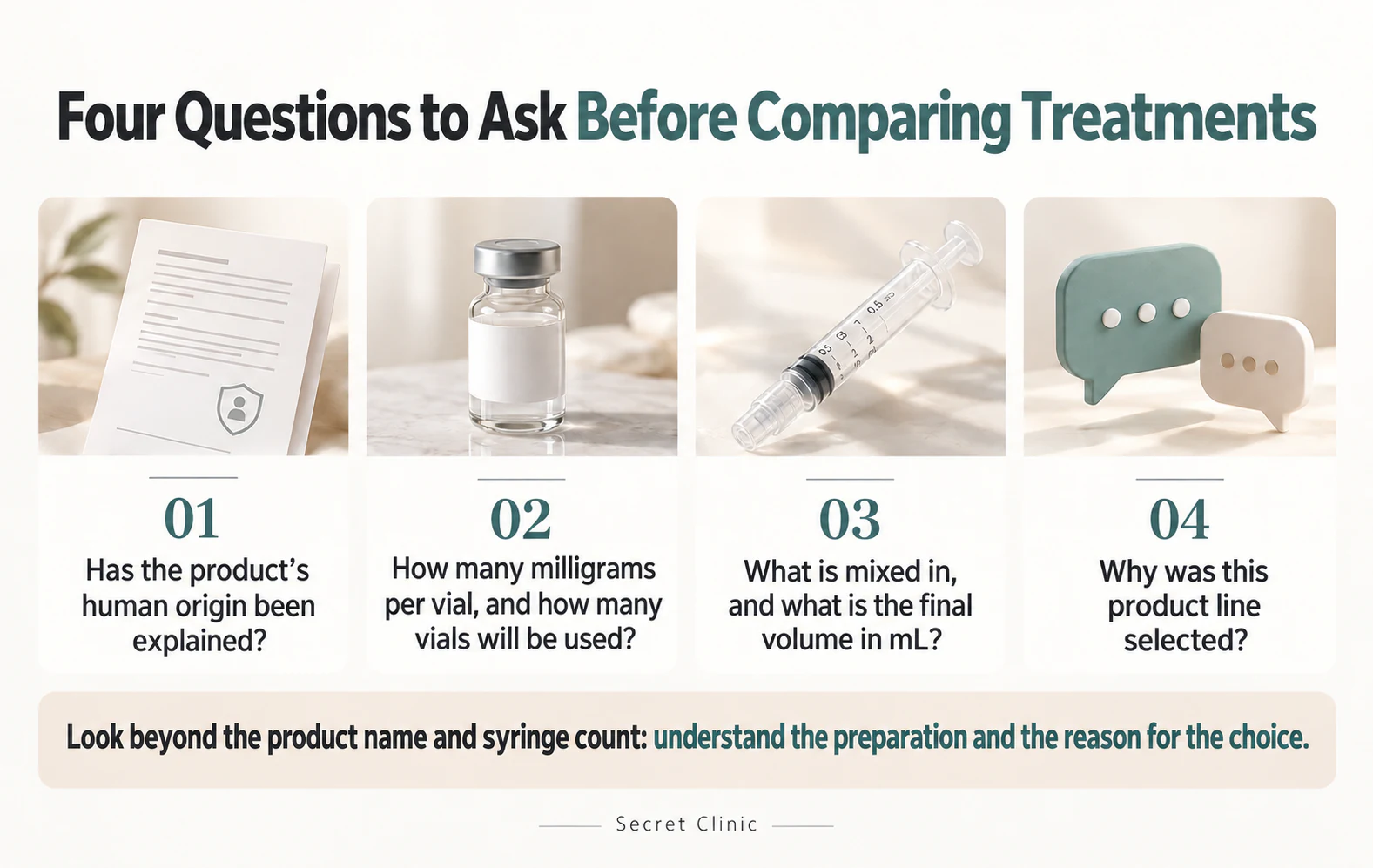
· How many vials of how many mg were used
· How many cc were created with what for the injection
Hardly anyone asks the second question, but in reality, it is as important as the first.
Products are divided by particle size
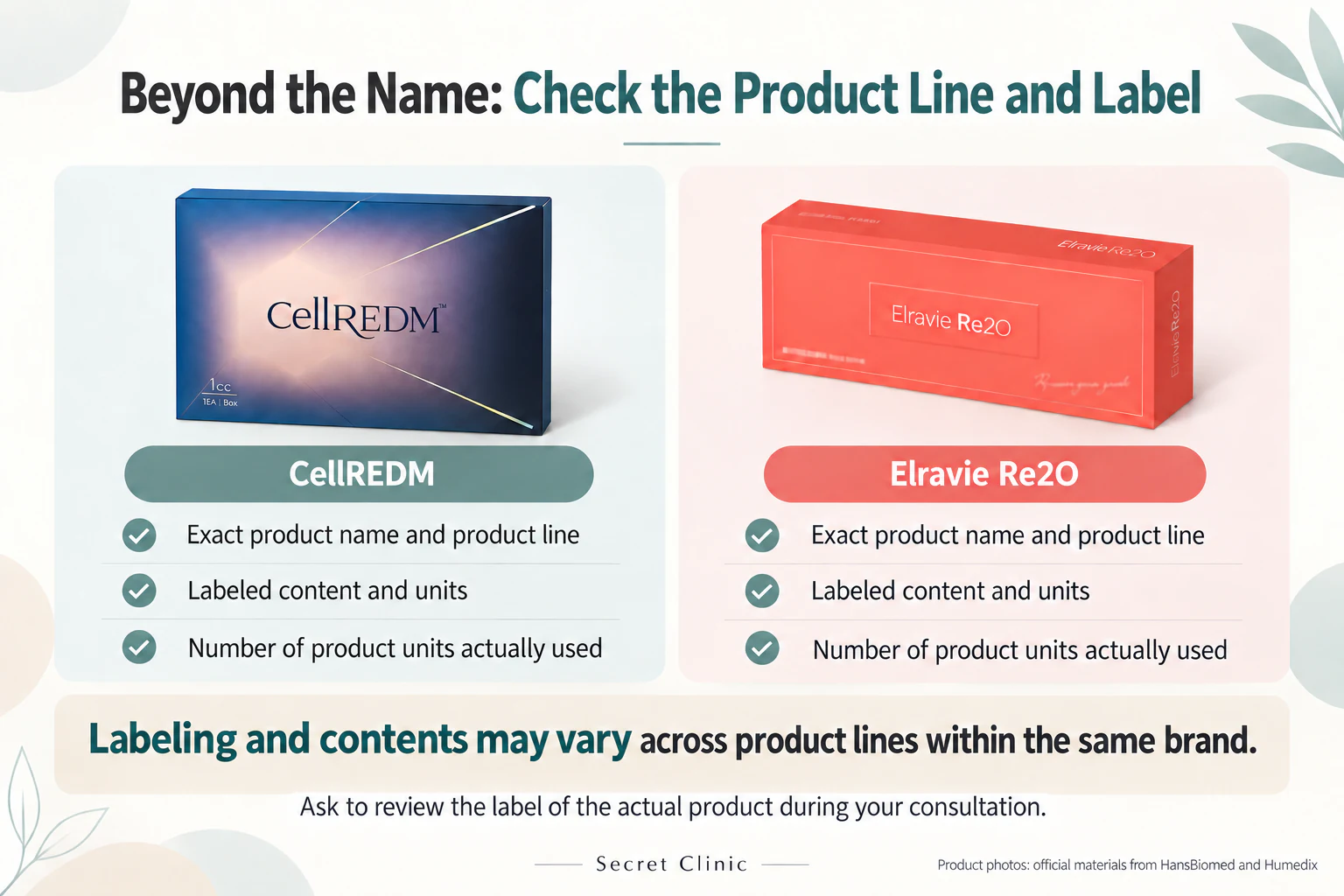
Both companies are releasing products with different particle sizes. Based on disclosed data, CellReDM particles are less than 75㎛. Even if grouped under the same name, the particle size and weight per vial differ depending on the product.
Smaller particles are easier to use on thin skin, while larger ones are used for areas with different characteristics; however, smaller is not better, nor is larger. What you should hear in a consultation is not the number itself, but why that specific lineup was chosen for that area of your face.
Limitations and risks you should know
Redness, swelling, bruising, and pain at the injection site are common in injectable procedures and usually subside within a few days. Feeling a slight thickness at the injection site for a while is also a reported reaction.
However, since this product group has not undergone the standard item approval process, the types and frequencies of adverse reactions are not organized and disclosed like approved items. It is better to be clearly aware of this point. The same applies to the magnitude of the effect. We are not at a stage where we can provide figures confirmed through comparative clinical trials.
If you experience a rising fever, worsening pain, or an enlarging lump after the procedure, you must inform the clinic where you received the treatment, regardless of how much time has passed.
In Summary
The reason the dosage is displayed in mg is that the content is solid. Since 1 vial counts the amount of that ingredient and 1 syringe counts the volume contained, the two are not counting the same thing. A comparison is only possible when you know how many vials of how many mg were used and how many cc were made with what.
자주 묻는 질문
Which is better, CellReDM or Re2O?
It is not a relationship where one can be determined as better. Both products belong to the same category of processed acellular dermal matrix from donor skin, and they are divided into lineups with different particle sizes and dosages. For a comparison, it is more practical to hear which lineup is planned for which area rather than just the product name.
Aren't 1 syringe and 1 vial the same thing?
They are different. 1 vial is one bottle of the product with a fixed weight of ingredients inside, while 1 syringe is one injector counting the volume it holds. Since one bottle can be divided into two syringes, you cannot know how much of the ingredient is included just by the number of syringes.
Is it better to have smaller particles?
That is hard to say. Smaller particles are easier for thin skin, while larger particles are used for areas with different characteristics. It is a matter of where it will be used, not a matter of numerical superiority.
What should I ask during the consultation?
You should ask how many vials of how many mg are being used, how many cc are being created with what for the injection, and why that specific lineup was chosen. A consultation where the last question is answered is generally trustworthy.
How is it different from existing skin boosters?
Even the display method is different. Existing products are liquid and displayed by volume, while this product group has solid components as the main body and is displayed by weight. The classification is also different. Among existing products, some are approved as medical devices or medicines, but these are human tissue materials.
What are the side effects?
There may be redness, swelling, bruising, and pain common to procedures where something is injected into the skin, which usually subside within a few days. However, since adverse reactions for this product group are not organized and disclosed like approved items, it is difficult to state the types and frequencies in figures.
원리, 상담 대상과 주의사항을 시술 상세페이지에서 함께 확인해 보세요.
시술 상세 보기온라인 상담 신청
현재 고민과 연락 가능한 정보를 남겨주시면 확인 후 상담을 도와드립니다.