The Real Principles of Achieving a V-Line and Refining a Square Jaw with Botulinum Toxin | Sinnonhyeon Dermatology Botox
The first step in a square jaw consultation is not choosing a procedure, but identifying the cause. This is because there are four reasons for an angular jawline—bone, muscle, fat, and sagging—and botulinum toxin only affects the muscle. This article summarizes what toxin actually does, how long it takes for changes to appear, and what happens when muscle is not the cause.
이 글은 일반적인 상담 준비 정보입니다. 개인별 피부 상태와 시술 계획은 의료진 상담에서 확인해야 합니다.
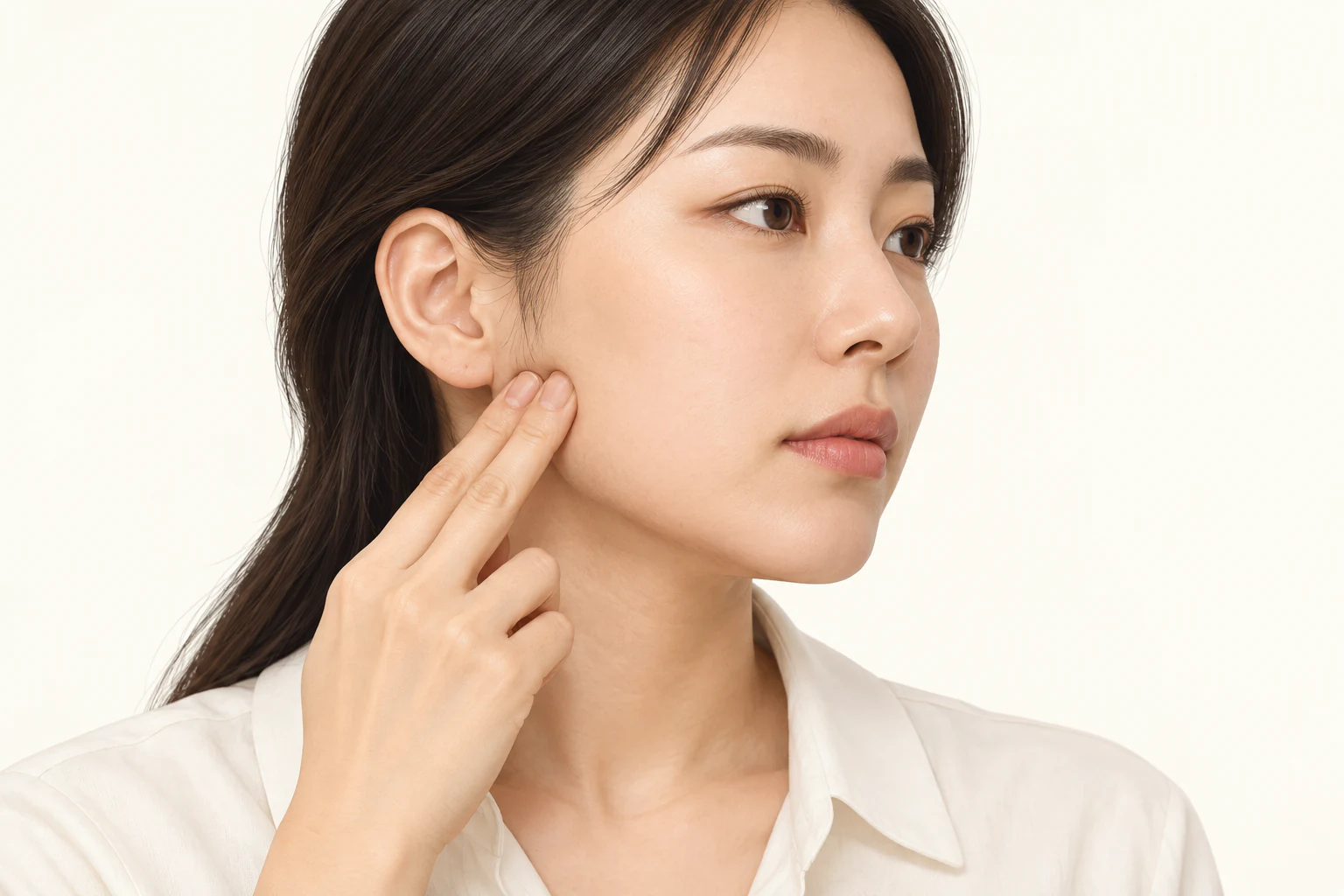
There is a phrase most commonly heard during jawline consultations.
“I heard that getting it in the jaw makes it slimmer.”
There are cases where this is true and cases where it is not. If you know where that difference comes from, you can judge for yourself whether to receive it or not. At Secret Clinic, we do not bring up the procedure first during square jaw consultations. We first look at why it looks angular now.
There is more than one reason why the jawline looks angular
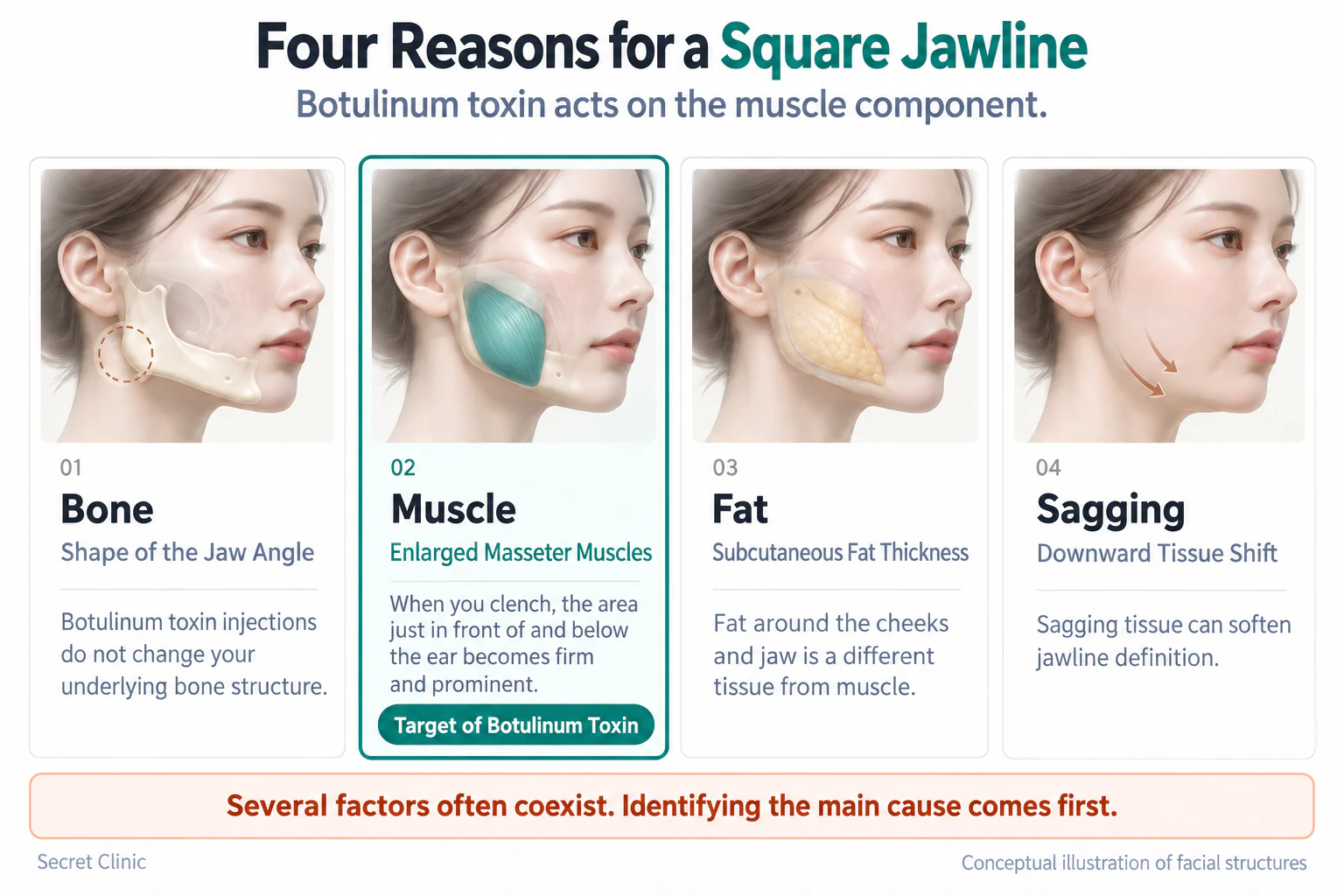
It can be broadly divided into four categories.
First, bone. If the angular part of the jawbone, called the mandibular angle, flares outward or is long downward, the face looks angular. Since it is an innate skeletal structure, it does not change with injections.
Second, muscle. If you feel a hard protrusion below the front of the ear when you clench your teeth, it is a case where the muscles of mastication, specifically the masseter muscle, are developed. Botulinum toxin targets this muscle.
Third, fat. If subcutaneous fat is thickly situated under the chin and in the cheeks, the contour line becomes blurred. This is a story of a different layer than the muscle.
Fourth, sagging. As tissues move downward with age, the original jawline is buried and appears square. In this case, it is a matter of lifting rather than reducing.
There is one important point here. These four factors are usually mixed. Therefore, if only one is addressed, results may not be as expected.
What toxin does is prevent the muscle from being used
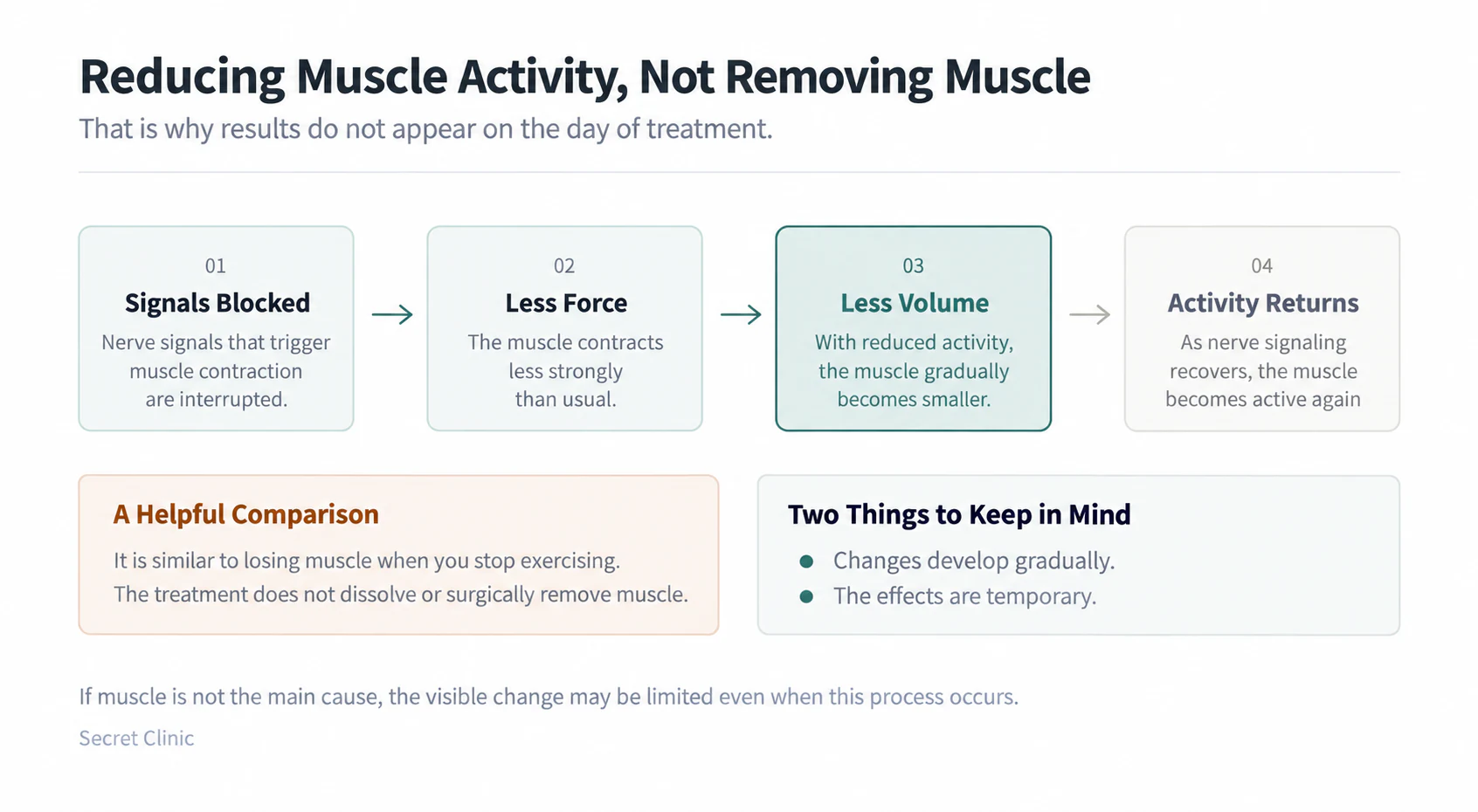
Botulinum toxin does not directly melt or shave down the muscle. It blocks the signal that the nerve sends to the muscle to "contract."
When the signal is cut, the muscle uses less force, and unused muscles decrease in volume over time. The nature is similar to how muscles are lost when you stop exercising. Therefore, results do not appear on the day of the injection. Time is needed for the muscle to decrease.
Knowing this structure leads to two things. One is that changes come gradually, and the other is that once the signal returns, the muscle starts to be used again. This is why it is not a permanent procedure.
So it is better to start knowing the timetable
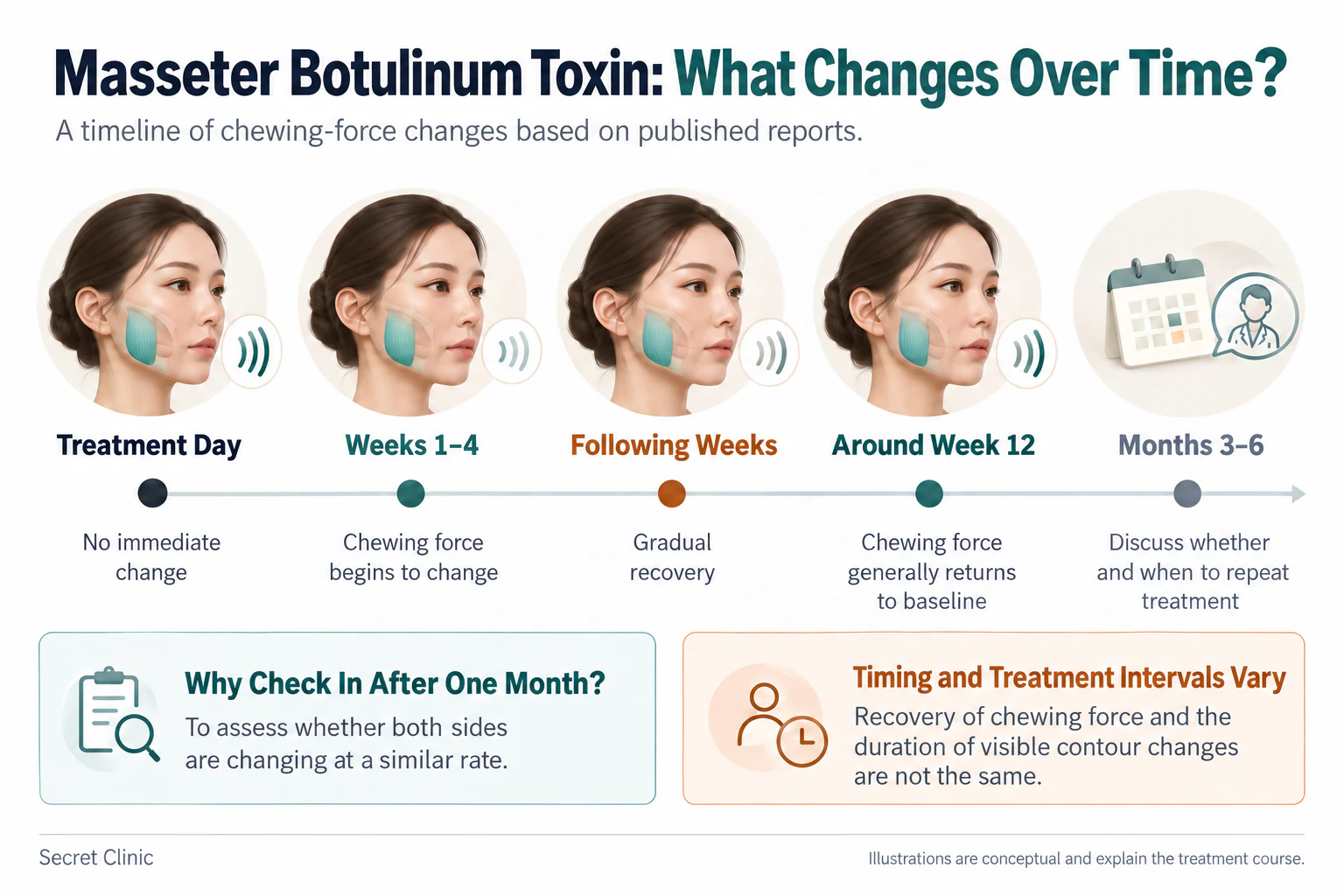
According to reported data, changes in biting force begin between 1 and 4 weeks after the procedure, gradually recover over the following weeks, and generally return to original levels by around 12 weeks. Changes in appearance also follow this flow.
Re-treatment is usually discussed at intervals of 3 to 6 months. However, this is a general range and does not mean the same interval is right for everyone.
Saying "let's see in a month" during a consultation is to see the results, but the greater purpose is to check whether both sides are changing at the same rate.
What happens when muscle is not the cause
This is the part I want to emphasize most in this article.
There is little to no effect. If you receive toxin when the skeletal structure is the main cause, there may be slight changes, but not as much as you expected. Then the dose is increased, and increasing the dose leads to the problems below.
The face may appear hollow. Cases have been reported where the tissue covering the area where the muscle decreased sinks, making the side cheeks look hollow. This occurs more easily in lean individuals.
Sagging may become more visible. When muscle decreases rapidly, the skin and fat covering it lose their support. Reported data states that this reaction is more common in those aged 40 and older. This is why we are cautious about using only toxin for those who already have sagging.
Limitations and risks you should know
These are reactions that may occur. The figures below are taken from data reported by a researcher who summarized 2,036 procedures. As these are not independently verified statistics, please view them only as a general scale.
· Feeling of weakened biting force — Most common. In reported data, it is about 30%; tough foods may become uncomfortable, and it usually recovers by around 12 weeks.
· Cases where it looks more angular immediately after the procedure — Reported to appear within 24 hours and subside within 10 days.
· When the corners of the mouth rise less or are asymmetrical when smiling — Occurs when the injection site is biased upward or forward, affecting facial expression muscles. Recovery takes 1 to 3 months.
· Cases where the side cheeks appear hollow.
· Cases where the jawline appears sagging — More common in those aged 40 and older.
· Difficulty opening the mouth wide, feeling of dry mouth — When the injection is deep or toward the back.
· Bruising, headache, dizziness.
There are also rare reports. There have been case reports of changes in pronunciation or changes in taste.
Additionally, if you are pregnant or breastfeeding, have neuromuscular diseases, or have inflammation at the procedure site, you must consult regarding whether to proceed. Secret Clinic also checks these items first during the medical interview.
How much evidence has been accumulated?
To be honest, high-quality evidence has accumulated slowly compared to how long and widely it has been performed.
A Cochrane review published in 2013 searched 683 papers on this topic and reviewed 23 in full, but reported that they failed to find a single case of a randomized controlled trial that met the criteria. Randomized studies have since been reported, but it is still difficult to consolidate the numbers into one because the dose, injection points, and methods for measuring effectiveness vary by study.
Therefore, if definitive numbers like "it lasts for X months" or "it reduces by X millimeters" come up during a consultation, you may ask again.
Things that are good to check during a consultation
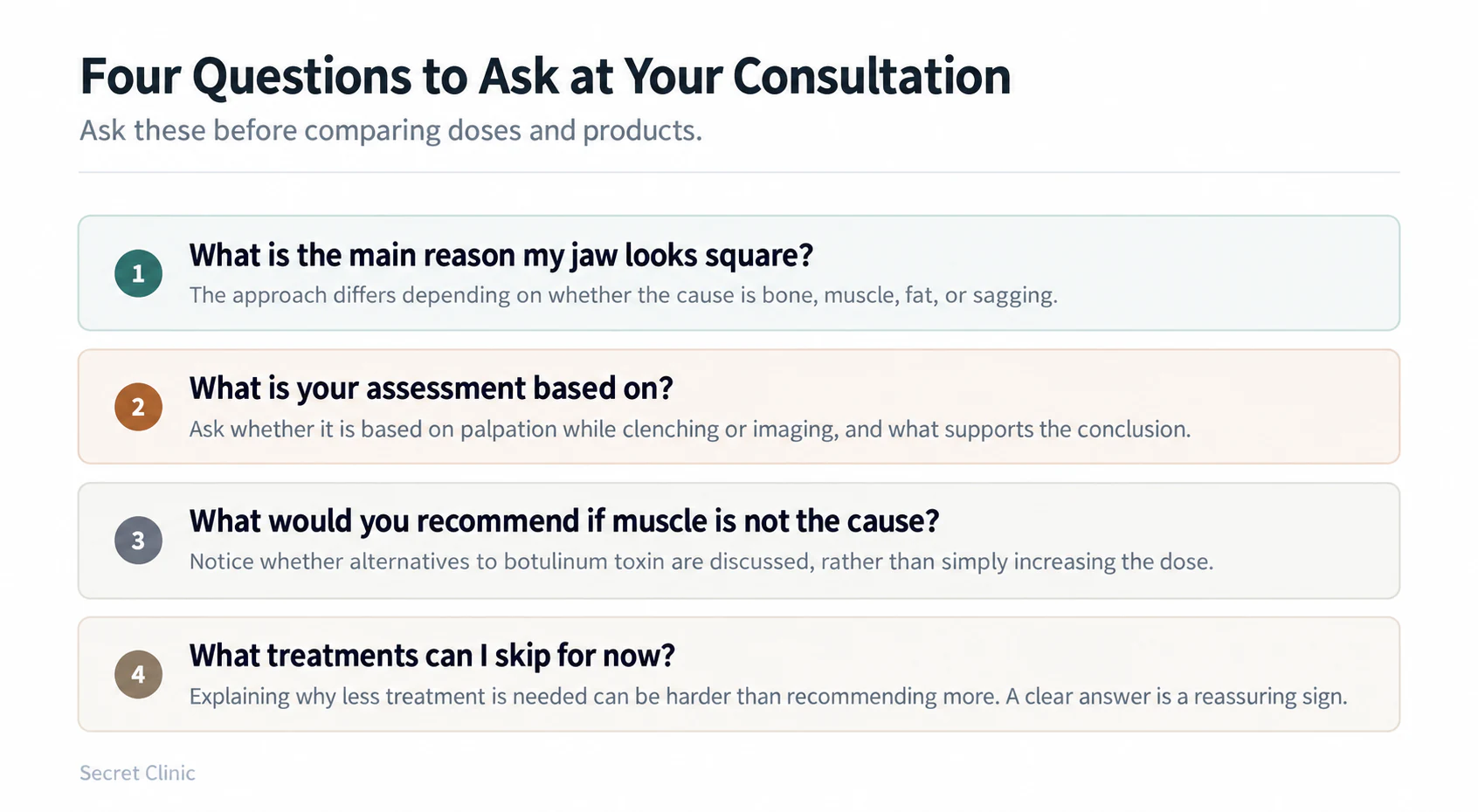
If you are comparing Gangnam botulinum toxin consultations in several places, it is practical to ask the following:
· What do you see as the main reason for the angular appearance in my case?
· How did you make that judgment — was it through palpation when clenching the jaw, or through imaging?
· If muscle is not the cause, what approach do you recommend?
· What is something I do not need to do right now?
Consultations where the last question is answered are generally reliable. Many people compare equipment or dosage first when looking for a Sinnonhyeon dermatology clinic, but the order should be the opposite.

In Summary
There are four reasons why the jawline looks angular—bone, muscle, fat, and sagging—and botulinum toxin only targets the muscle.
If muscle is the main cause, it is a worthwhile option. However, changes come gradually, and once the signal returns, it reverts back. If muscle is not the main cause but you try to solve it by increasing the dose, you may lose more than you gain.
Therefore, the most important thing in this procedure is neither the dose nor the product, but the stage of determining whether a person is a suitable candidate. This is also why Secret Clinic spends most of the consultation time on this.
자주 묻는 질문
Will it become slim immediately after the injection?
No. Toxin does not shave down the muscle but prevents it from being used, so time is needed for the muscle to decrease. Reported data states that changes in biting force begin between 1 and 4 weeks. Changes in appearance also follow this flow.
Why does it look more angular the day after the injection?
There is a reported reaction that appears within 24 hours immediately after the procedure and subsides within 10 days. However, if it is accompanied by heat or pain, or if it remains the same after ten days, please contact us as a check is necessary.
How long will the effect last?
Re-treatment is usually discussed at intervals of 3 to 6 months, but it is difficult to define the period definitively as dosage and measurement methods vary by study. It is more accurate to determine the interval that suits you after seeing the progress after the first treatment.
Do I have to keep getting it?
If you stop, the signal returns and the muscle will be used again. However, what you have received in the meantime does not disappear, and you can decide whether to continue by looking at your condition at that time.
Will it become uncomfortable to chew?
Will my cheeks look hollow?
Cases have been reported where the area where the muscle decreased sinks, making the side cheeks look hollow. If you are lean or if the volume of your cheeks is already reduced, please let us know in advance during the consultation. We will adjust the dose and injection site differently.
I am older; will that affect the procedure?
Age itself is not the criterion. However, if the muscle decreases rapidly, the tissue covering it loses support, which can make the jawline look sagging, and reported data says this reaction is more common in those aged 40 and older. If sagging is also present, a reduction procedure alone will not provide the answer.
Can my facial expression become awkward when I smile?
If the injection site is biased upward or forward, the muscles that create facial expressions can be affected. Recovery takes 1 to 3 months. While not common, this is why where the injection point is set is important.
원리, 상담 대상과 주의사항을 시술 상세페이지에서 함께 확인해 보세요.
시술 상세 보기온라인 상담 신청
현재 고민과 연락 가능한 정보를 남겨주시면 확인 후 상담을 도와드립니다.